firmamento
a week of encounters, studies, pathways, collaborations
2024
from 13 to 18 February 2024
TeatroBasilica, Rome
Sala 1 - Centro Internazionale d’Arte Contemporanea, Rome
Blastula.scarnoduo • Daria Deflorian • Extragarbo • Gaia Ginevra Giorgi • Viola Lo Moro • Muta Imago • Giovanni Onorato • Gabriele Portoghese • Arianna Pozzoli • Attilio Scarpellini • Giulia Scotti • Tilia Auser • Lorenzo Tomio
firmaménto (firmament), masc. noun [from eccles. Latin firmamentum, “sky” (in class. Latin “support, prop”), derived from firmare, “to make stable”, on the model of the Greek στερέωμα (οὐρανοῦ), which denotes the stable vault holding up the celestial ocean.]
After attempts, stumbles, voyages on the open sea and unexpected discoveries, we feel ready to tell what INDEX would like to be today and how it imagines the future. We have chosen to open up not with a text, a manifesto, an interview or a press release, but through what we do best: making, together. Not a festival, but the presentation of a geography of actions; a story, shared in time and space, of a body of projects in the making that weaves together generations, formats and ways of meeting the audience. We have called it firmamento: a simple, beautiful word that unites the single and the whole, stability and the continuous movement that sustains it. A horizontality, a reshuffling we strongly wanted. A direction. A direct, joyful way of meeting one another.
And so, for the 2024 edition, artists from the Vivarium alternate with the artistic direction of INDEX, with associated artists and with artists who collaborate with Daria Deflorian and Muta Imago.
And so, shows that have already premiered are staged alongside previews, studies and/or lecture-performances. And so on: a reading, a concert, a performance.
And so, durations alternate between short interventions and more canonical lengths, with moments of encounter and discussion that see the two adjoining spaces of the TeatroBasilica and the gallery Sala 1 - Centro Internazionale d’Arte Contemporanea working together.
: programme
Tuesday 13 February · 19:30 · Galleria Sala 1Meet Tilia Auser: talk curated by viola lo moro
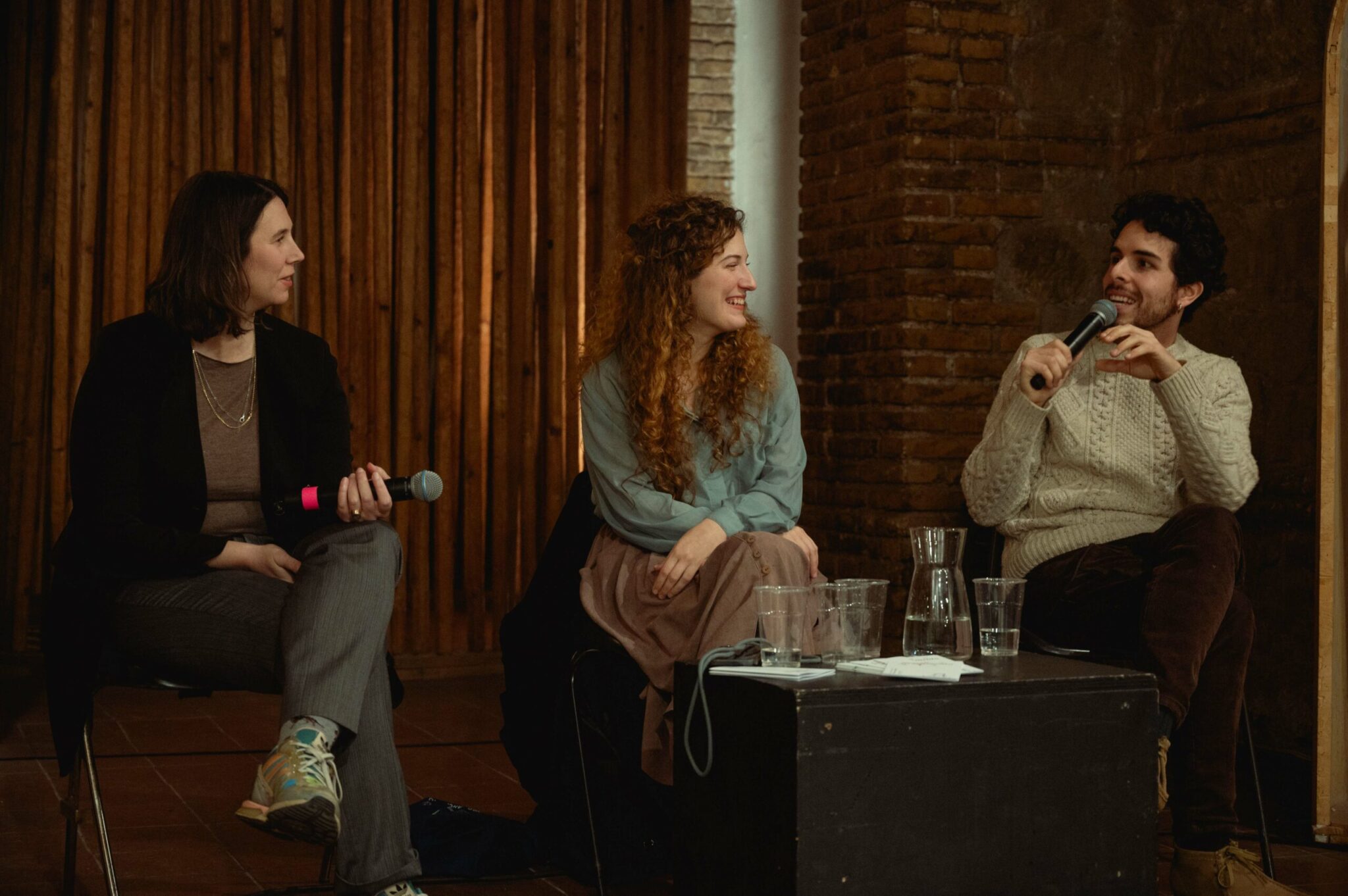
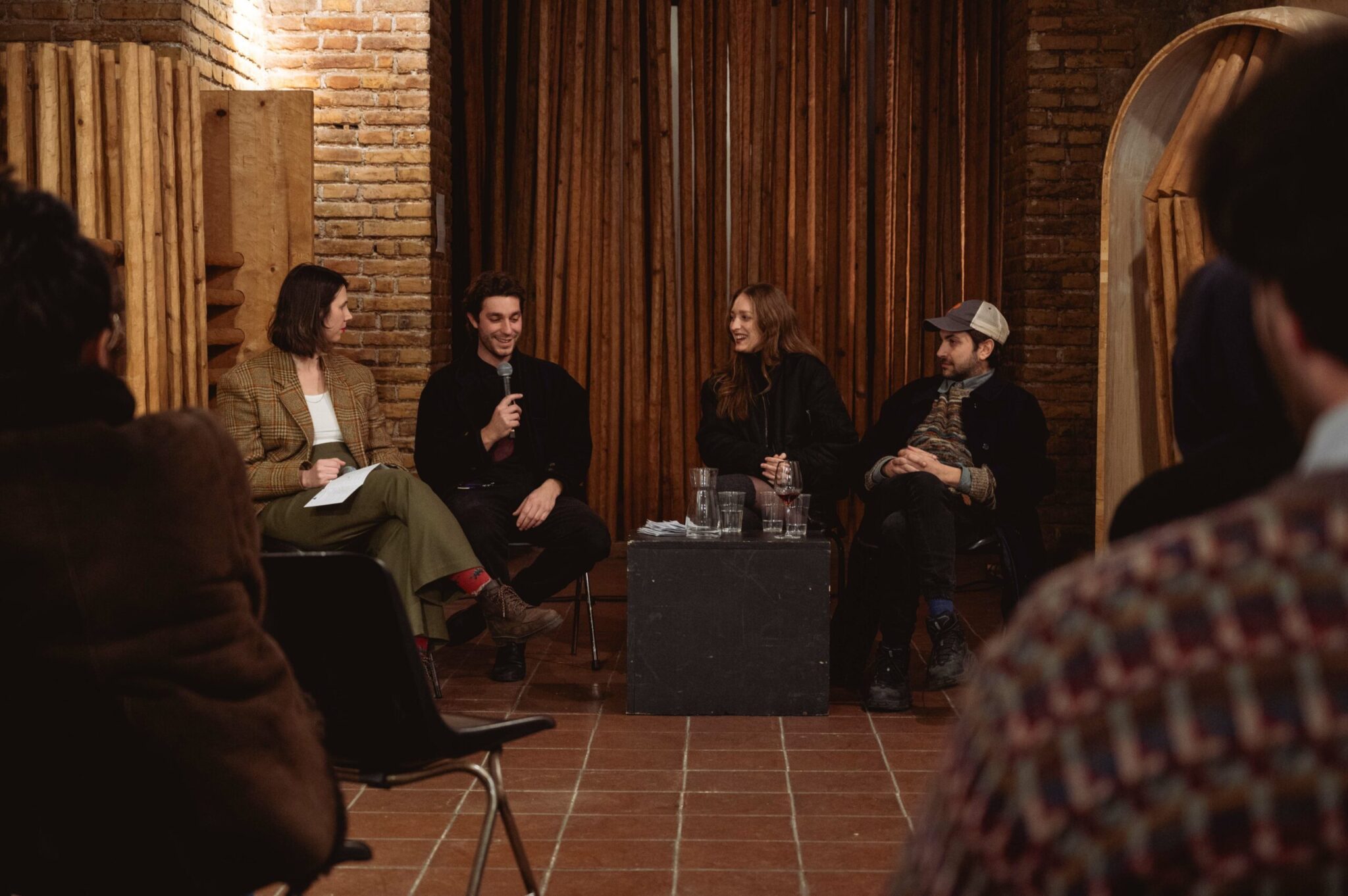
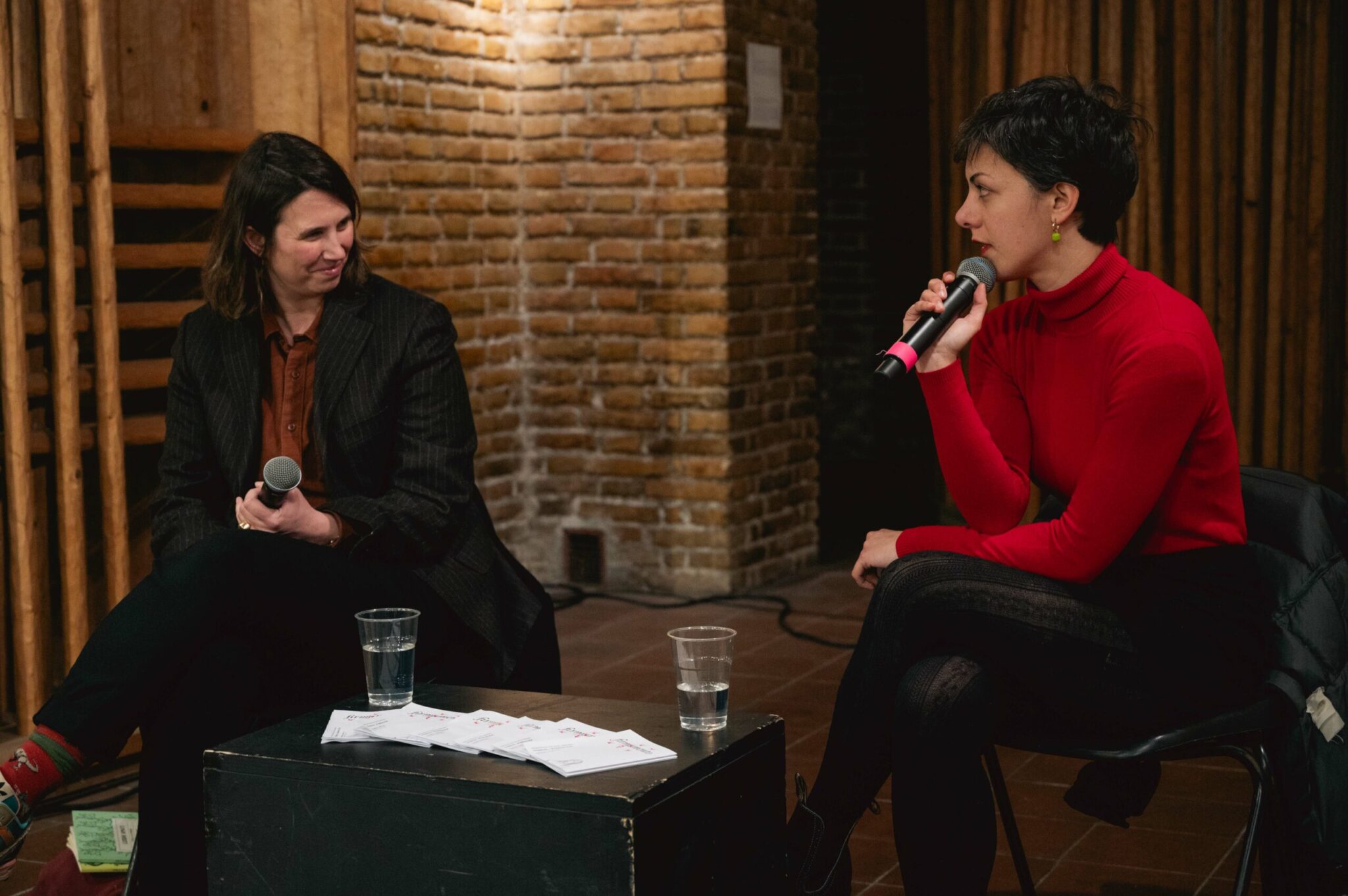
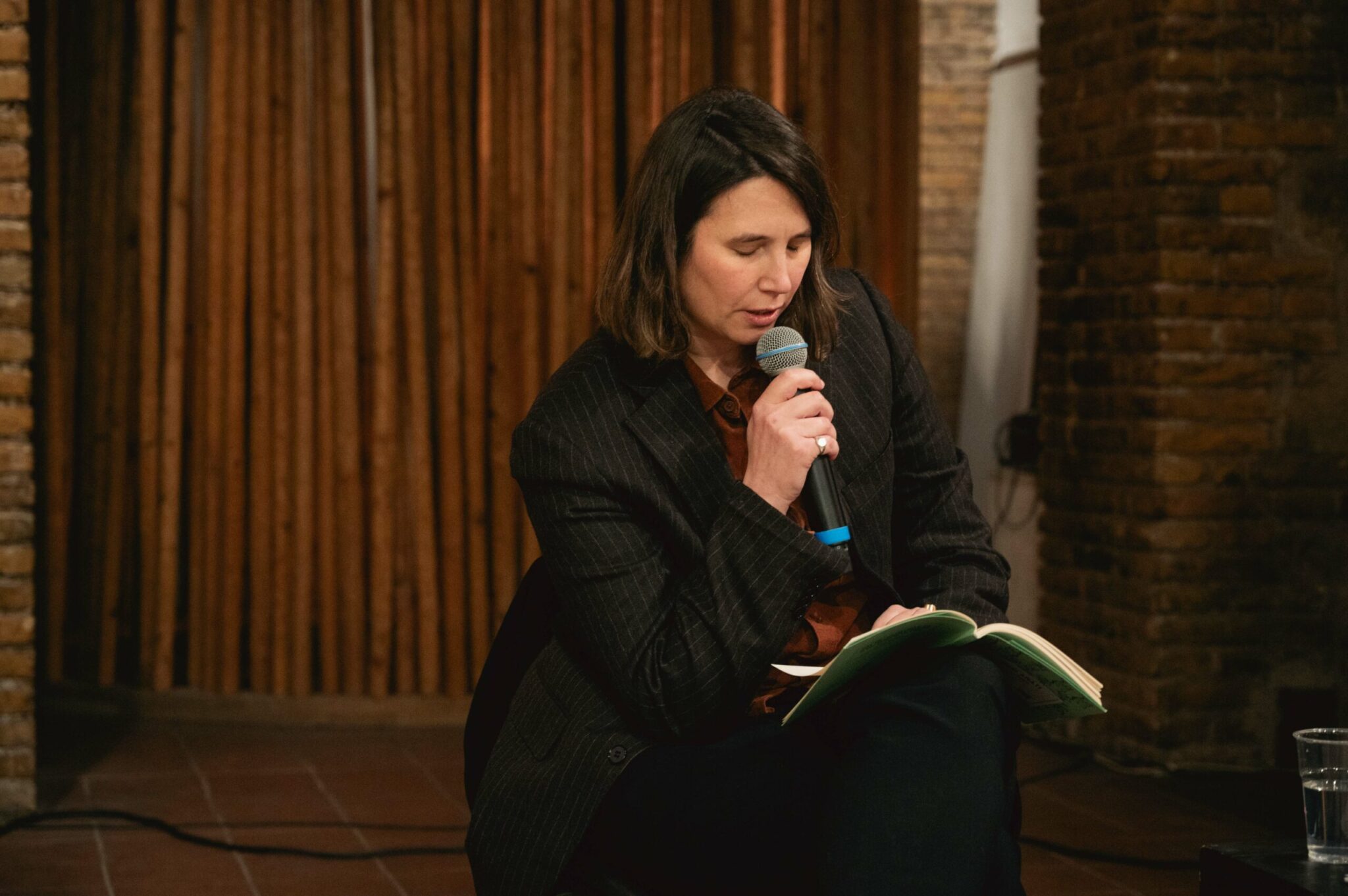
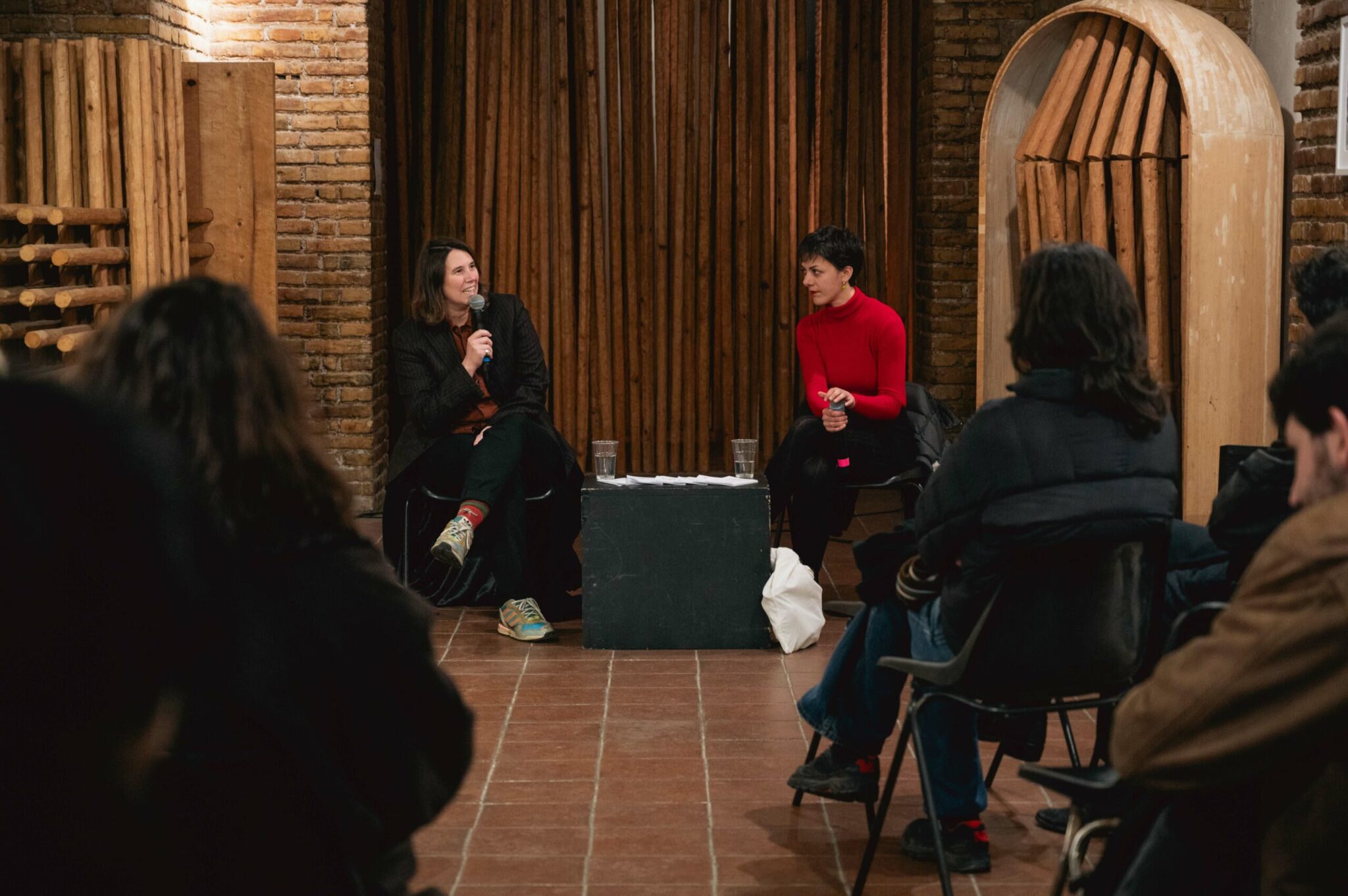
During the week of firmamento, in the spaces of the Galleria Sala 1, Viola Lo Moro meets some of the companies in the programme. The same questions for everyone, to share with the audience their own story and some burning issues about the state of the live arts in our country.
The talks were recorded and have become a podcast that can be listened to again.
This content is hosted by Spreaker: loading it sends some browsing data to Spreaker.
Tuesday 13 February · 21:00 · TeatroBasilicaAcabadabra: cosimo ferrigolo, gaia ginevra giorgi, edoardo lazzari / extragarbo
Acabadabra was born as an installation-performance work in intimate relation with the space for which it was imagined: a building of Fascist power in the centre of the city of Rome. First presented at Short Theatre 2021 at the Ex-GIL in Trastevere in a site-specific version, the work has now become a device for viewing and listening that investigates the relations of asymmetry and distorted mirroring on which the bond between centre and periphery is founded.
The show takes the form of a transformative experience that sees in the reclaiming of marginality a possible strategy of subversion, set against an idea of the city as a device of control, a space planned from above and a theatre of abuses of power, the expression of a colonialist project that continues to perpetuate its violence.
Paced according to the phases of the alchemical process, the dramaturgy unfolds through quotations, plunderings and transfigurations of the real, summoning linguistic signs from the urban text, traces of a parallel, inverted alter-city , so that from them the spectres of what will be may emerge.
Cosimo Ferrigolo is a stage manager, spatial designer and researcher. His interests revolve around the concept of “expanded scenography”, straddling Performance Studies and Planning Theory. He is a PhD student in Regional Planning and Public Policy at the Università Iuav di Venezia, and collaborates regularly with the company OHT - Office for Human Theatre and with the cultural association MetaForte, a culture-based urban regeneration project selected in 2022 by the Creative Living Lab call of the Italian Ministry of Culture.
Gaia Ginevra Giorgi is an author, sound artist and performer. A researcher working across the field of the performing arts, she develops practices and methodologies of inquiry for an affective and political rewriting of the landscape. Her practice integrates writing, sound, voice and performative devices. Her interventions produce ephemeral habitats, spaces of embodied and radical imagination. She curates the radio programme Walk so silently that the bottoms of your feet become ears (Fango Radio) and is a resident artist at Radio Raheem.
Edoardo Lazzari is an independent curator, educator and researcher at the Università La Sapienza in Rome, where he is developing research on assembly formats as a political methodology in the live arts. He has curated public programmes and pedagogical and participatory projects in institutional contexts (La Biennale di Venezia, MUDAM Luxembourg, Palazzo Grassi - Punta della Dogana, Peggy Guggenheim Collection) and beyond. He collaborates regularly with the Università Iuav di Venezia on the master's degree in Theatre and Performing Arts and on the Master Movies - Moving Images Arts.
In 2019 the three of them, together with Est Coulon, Giusy Guadagno, Leonardo Schifino and Theresa Maria Schlichtherle, created the collective Extragarbo, which accompanies and supports the projects of the group and of its members.
Wednesday 14 February · 19:00 · TeatroBasilicaA.L.D.E. live set: giovanni onorato
The music of A.L.D.E. set free from its narrative context. Giovanni Onorato and Mario Russo present the musical research carried out in recent years together with Lorenzo Minozzi: an ill-assorted mix of slam poetry, hip-hop and singer-songwriting. During the concert “sgorbietto”, a previously unreleased track, is presented.
Wednesday 14 February · 20:00 · Galleria Sala 1Meet Extragarbo: talk curated by viola lo moro
During the week of firmamento, in the spaces of the Galleria Sala 1, Viola Lo Moro meets some of the companies in the programme. The same questions for everyone, to share with the audience their own story and some burning issues about the state of the live arts in our country.
The talks were recorded and have become a podcast that can be listened to again.
This content is hosted by Spreaker: loading it sends some browsing data to Spreaker.
Wednesday 14 February · 21:00 · TeatroBasilicaTre voci: tilia auser
'What is that bird that cries
with such sorrow in its voice?
I am young as ever, it says. What is it I miss?'
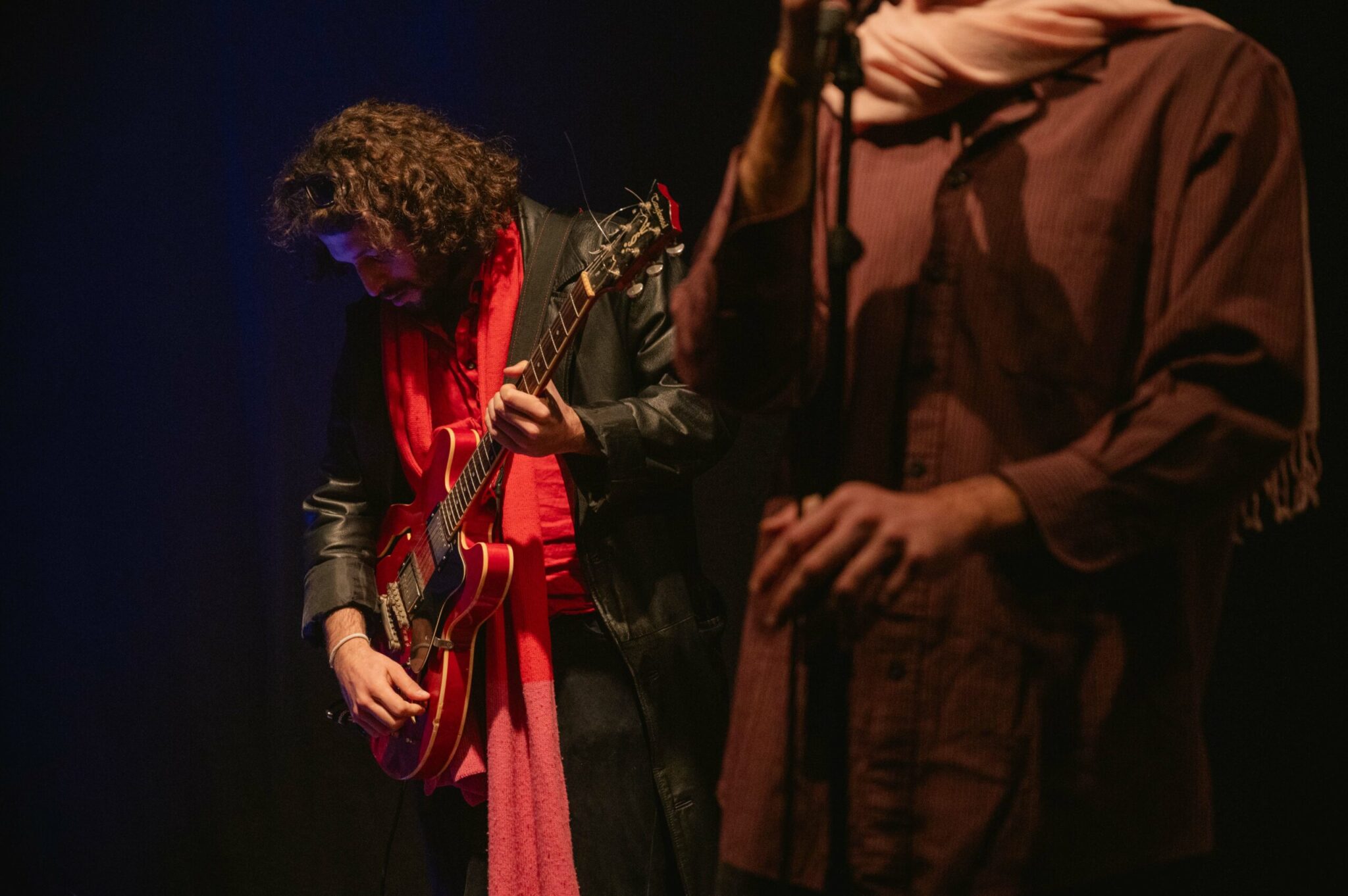
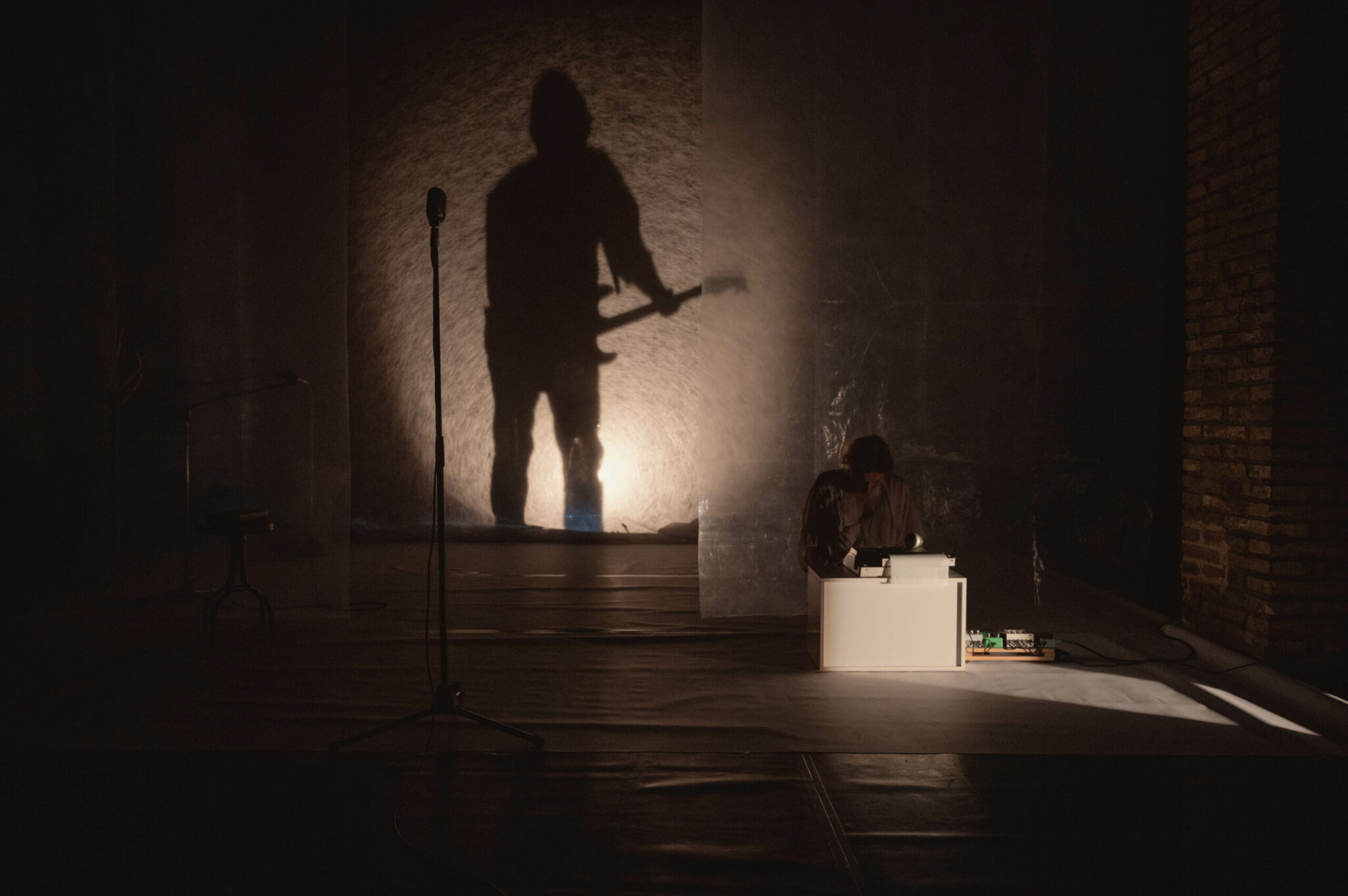
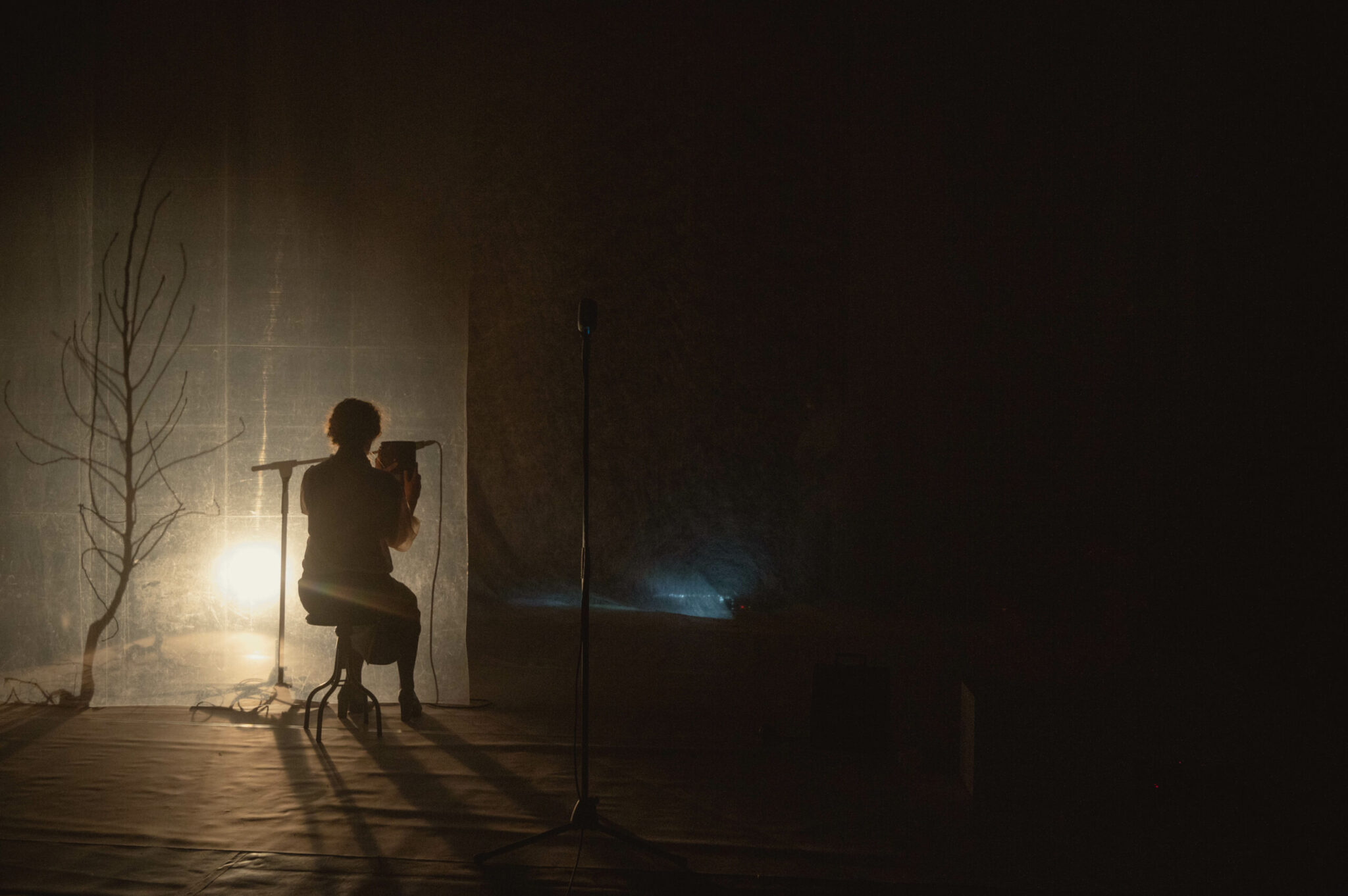
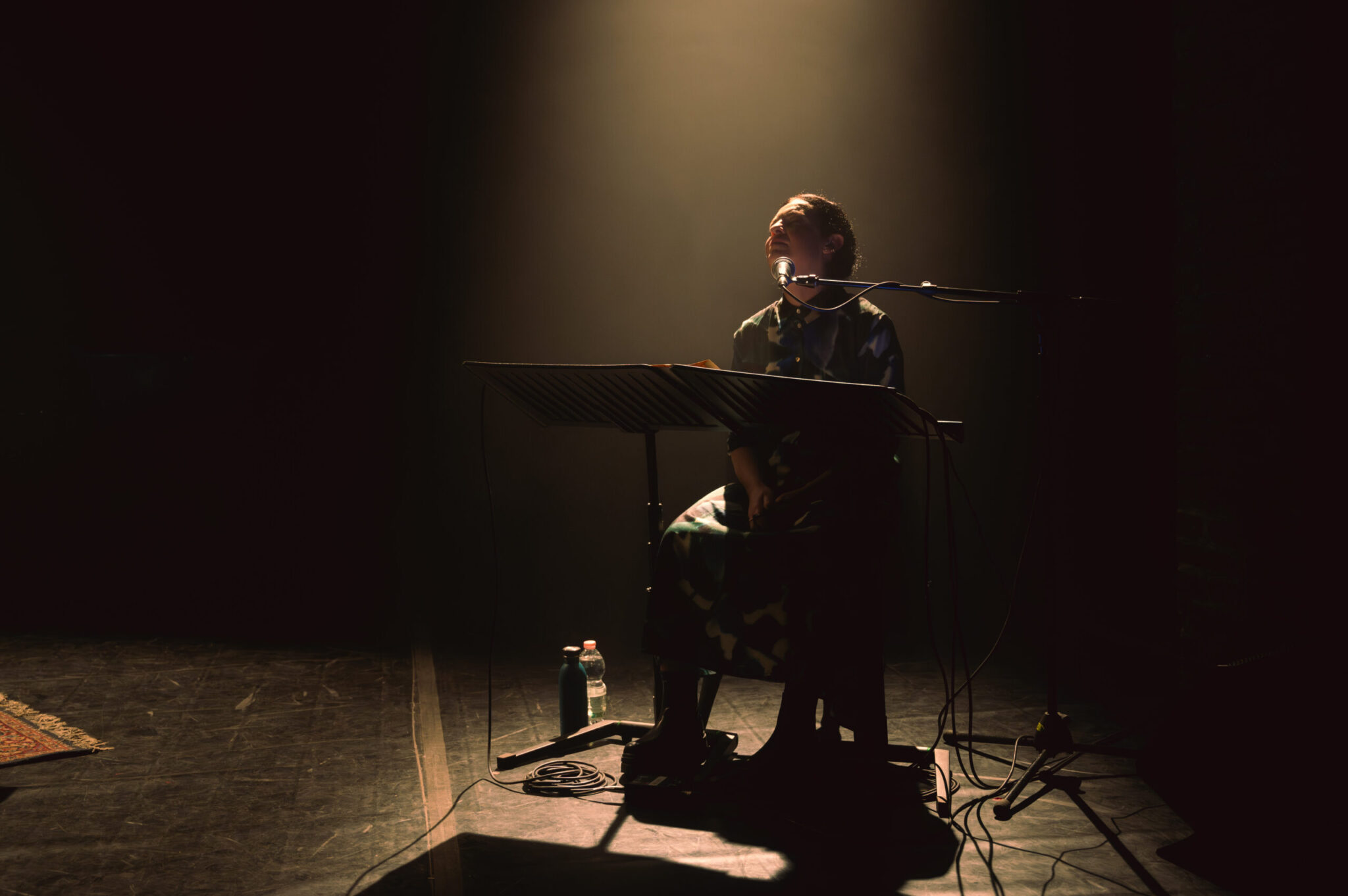
The stage and concert transposition of the only radio poem written by Sylvia Plath. A multimedia rewriting in which the poetic word becomes a voice that is embodied, amplified, filtered and sampled, in open dialogue with live electric guitar.
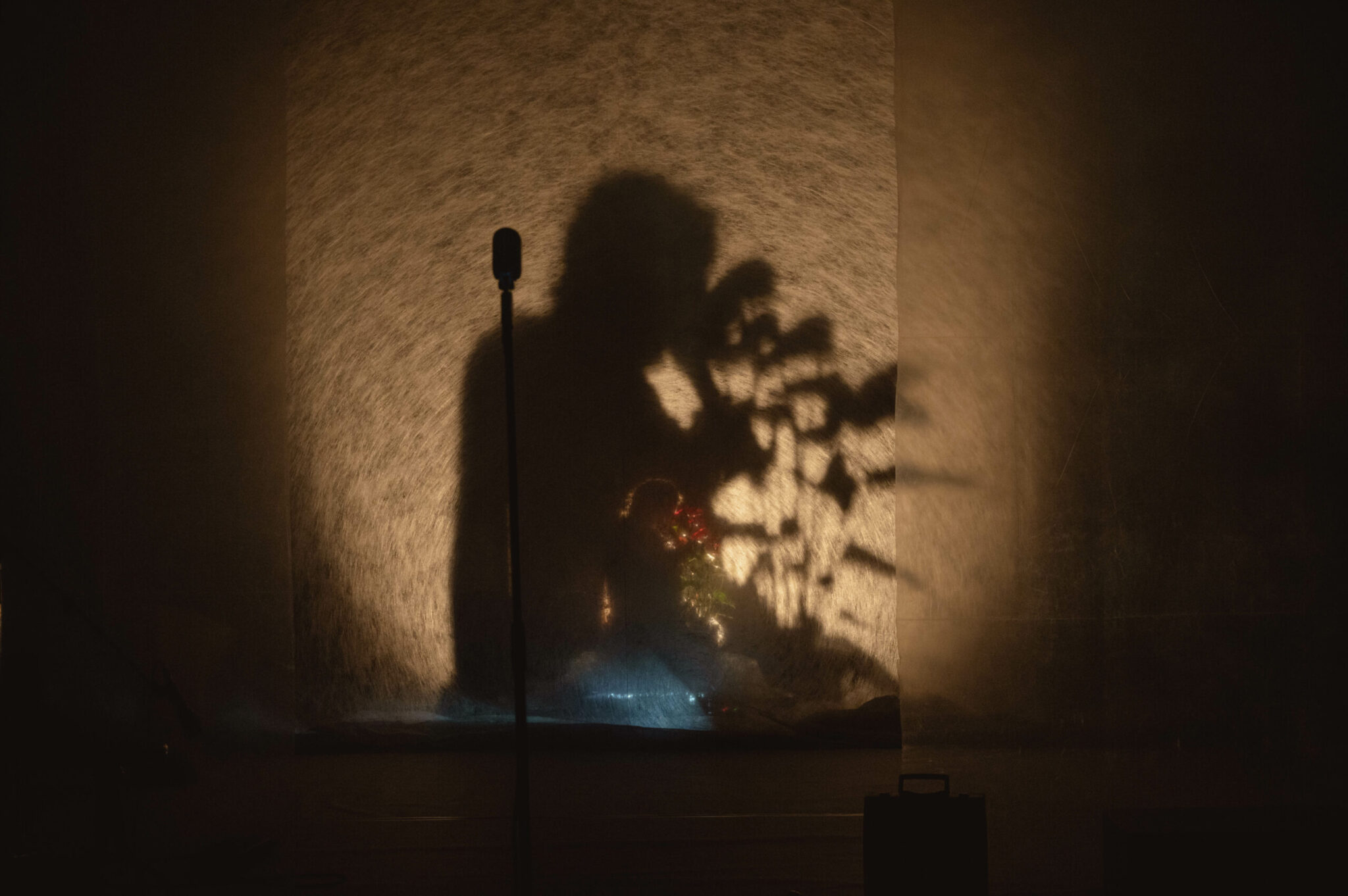
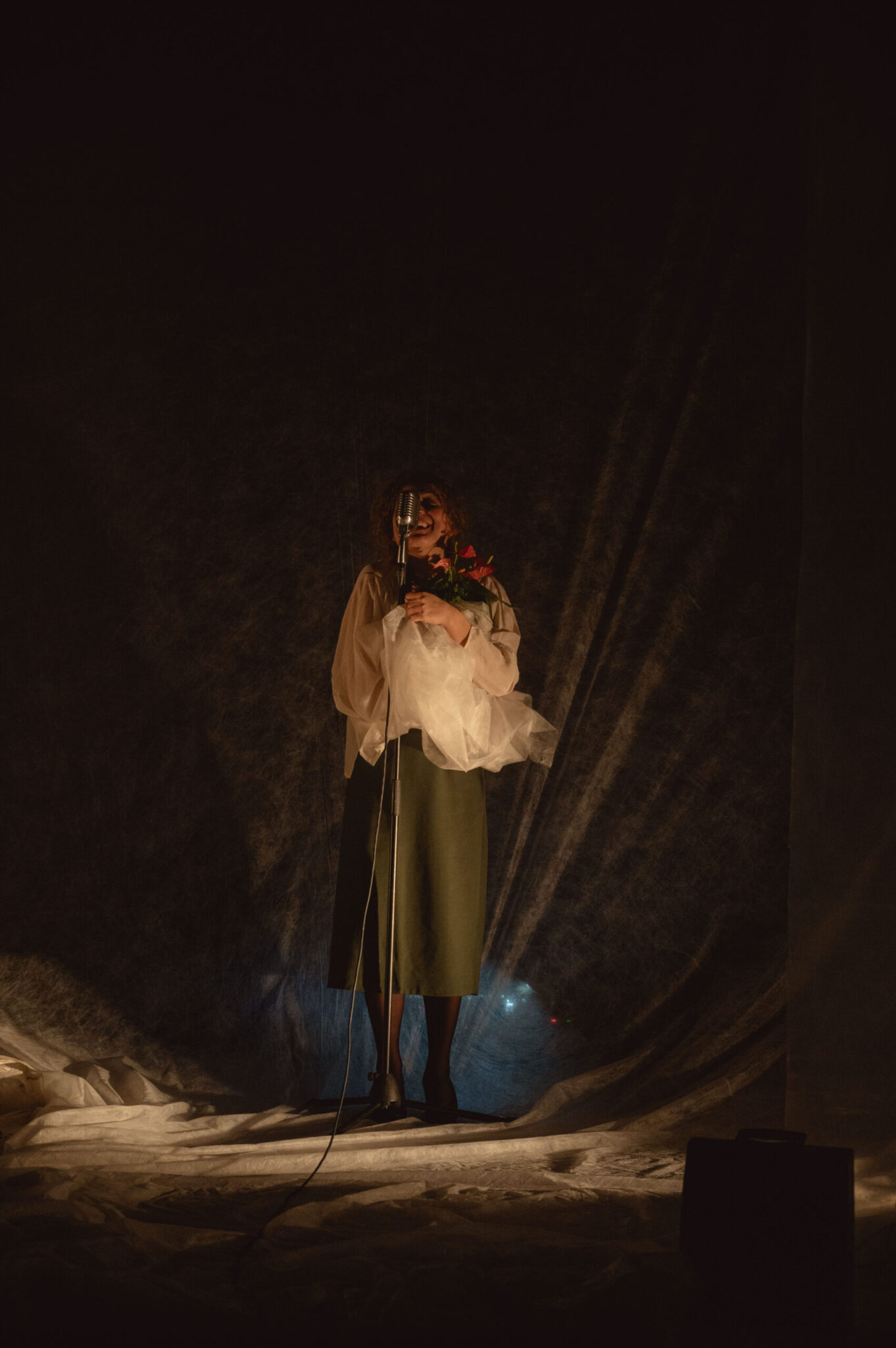
The crumpled slip of paper of the exquisite corpse reaches us from Sylvia Plath and her “Three Women. A Poem for Three Voices”: a radio play in free verse broadcast by the BBC in 1962. Three female characters interweave their soliloquies within the same frame of the maternity ward to which they have been admitted: the first to give birth to a child, the second brought there by a miscarriage, the third to rid herself of an unwanted pregnancy. They never meet: they simply cast the poetic word along the hospital corridors, questioning the fertilised body that bends, is wounded, lets itself be inhabited. Lines born to be spoken aloud, but also run through by an unwritten, underground song: so the “three women” have become “three voices” of a single body, and the spoken word a transversal, musical composition. A single female identity on stage moves between the three possible destinies, accompanied by the live sound design of the electric guitar. What does it mean to generate? What nourishes the promise we carry? What splits our time and our voice in two – or rather, in three?
Tilia Auser is a pseudonym and a container for performance practices in germination. It brings to the stage research on the threshold between voice, poetic word and sound, combining theatrical spaces and knowledge with site-specific incursions and the study of landscape. The Auser is the ancient branch of a river that no longer exists.
Sara Bertolucci (Lucca, 1994) graduated from the Scuola di Teatro di Bologna and completed her training at the Istituto di Ricerca di Arte Applicata Societas. She has devoted recent years to vocal research and its integration into theatre practice.
Riccardo F. Scuccimarra (Reggio Emilia, 1993) is a musician, composer and actor. Trained in blues and jazz electric guitar, he has a singer-songwriter project to his name and composes music for the stage. He graduated from the Scuola di Teatro di Bologna.
Thursday 15 February · 19:00 · TeatroBasilicaIl bufalo: attilio scarpellini
In 1920 Karl Kraus published in Die Fackel a letter that Rosa Luxemburg (by then murdered by the German Freikorps) had written in 1917 from Breslau prison: in the letter the revolutionary militant describes a scene she sees from the window of her cell, in the courtyard below. A buffalo is being beaten savagely with sticks by a group of soldiers to make it move, until from its eyes there falls a tear that Rosa compares to one on the face of a child. The letter is answered by an anonymous lady who signs herself only X-Y, who mocks the “good Luxemburg” and says she is not surprised that this rabble-rouser came to know “the rifle butt” (an allusion to the way she was killed). Kraus publishes the letter under the title “A woman without sentimentality”. But he replies in turn...
The voices and bodies of two actresses (Monica Piseddu and Aglaia Mora) and one actor (Bernardo Casertano) alternate on stage in an attempt to convey the deep music of a ferocious age, closer to our own than we would like to believe.
Attilio Scarpellini is a writer, radio author and dramaturg. He studied Political Science at La Sapienza in Rome and Philosophy at the University of Paris I (Panthéon Sorbonne). Since 2000 he has presented the early-morning programmes on Rai Radio 3 (Mattino 3 Lucifero and later Qui Comincia...). He founded the monthly “Quaderni del Teatro di Roma” and edited it until it closed. A dramaturgy tutor at “Ecce performer”, the workshop for actors and playwrights run by Elvira Frosini and Daniele Timpano, he went on to teach “Analysis and Methodology of Contemporary Performance” at the University of Rome - La Sapienza and “Dramaturgy of the Image” at the Scuola di Alta Formazione per la Danza Da.re. He has translated plays by Peter Handke, David Lescot, Guillaume Poix and Alexandra Badea. He also works as a dramaturg and director. He has written L’angelo rovesciato. Quattro saggi sull’ 11 settembre e la scomparsa della realtà (Rome, Idea, 2008), La fortezza vuota. Discorso sulla perdita di senso del teatro (with Massimiliano Civica, Rome, Edizioni dell’Asino, 2014) and Il tempo sospeso delle immagini (Milan, Mimesis, 2020). His play Figlio di cane is forthcoming from Mimesis.
Thursday 15 February · 20:00 · Galleria Sala 1Meet Giulia Scotti: talk curated by viola lo moro
During the week of firmamento, in the spaces of the Galleria Sala 1, Viola Lo Moro meets some of the companies in the programme. The same questions for everyone, to share with the audience their own story and some burning issues about the state of the live arts in our country.
The talks were recorded and have become a podcast that can be listened to again.
This content is hosted by Spreaker: loading it sends some browsing data to Spreaker.
Thursday 15 February · 21:00 · TeatroBasilicaSuck my Iperuranio: giovanni onorato
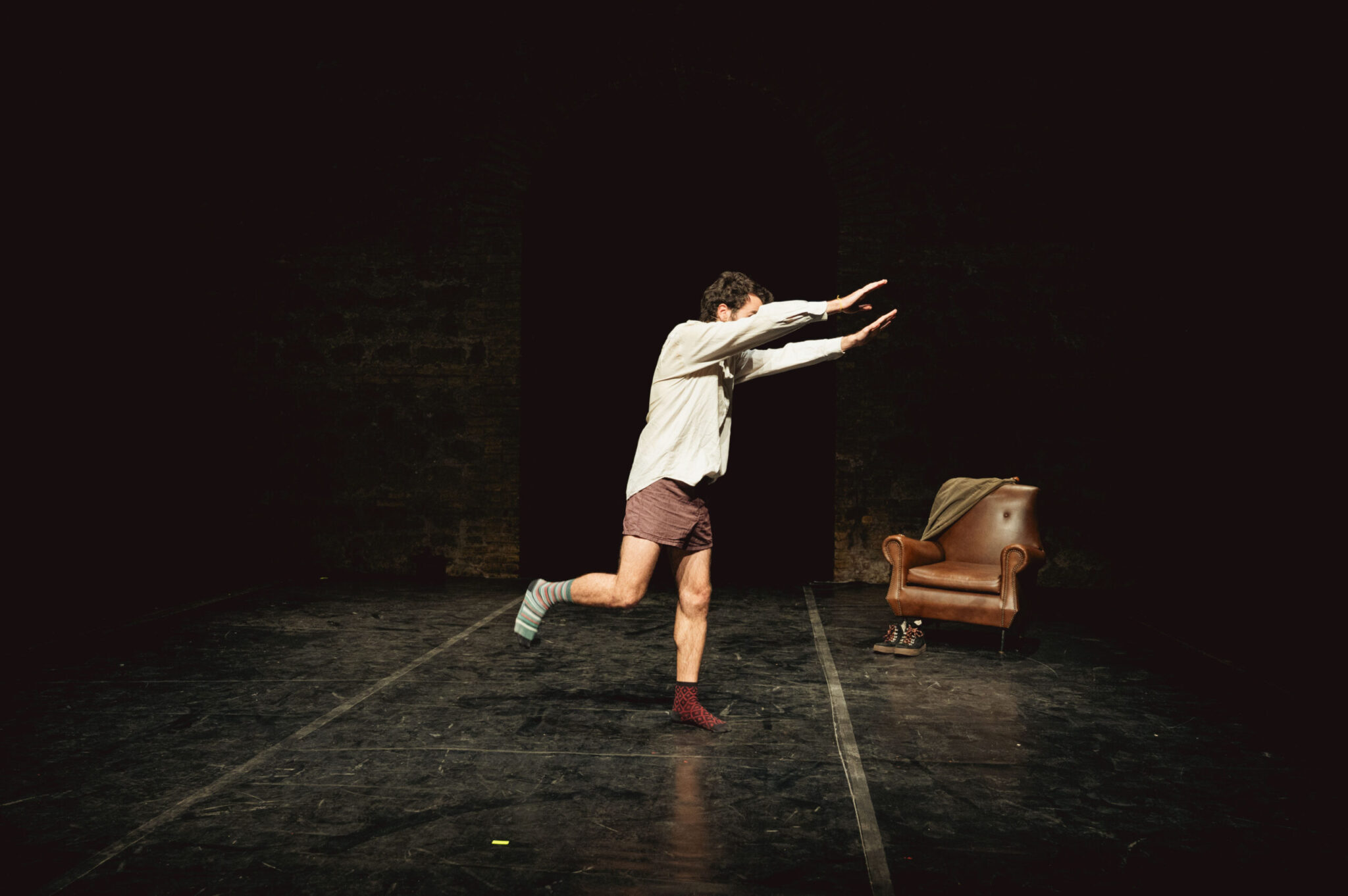
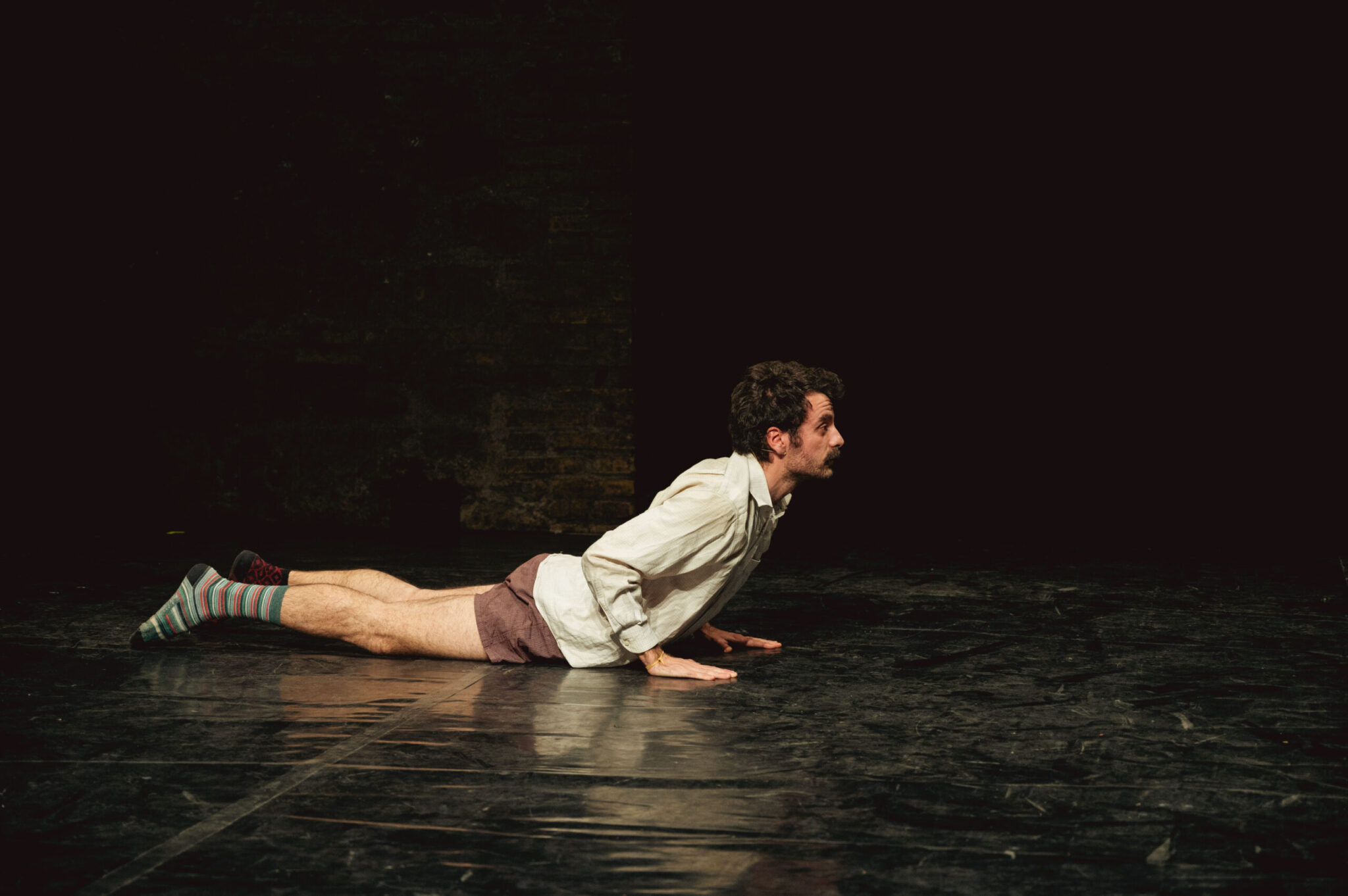
The wish was to take an effective performance practice such as stand-up comedy and give it back to its place of origin: the theatre. In this original piece of writing for a solo actor, inspired by the stories of Heinrich Böll, stand-up comedy becomes a narrative tool in the service of a contemporary dramaturgy: a comedian shut in his room is trying to forget his lost love, and does so by forcing himself to rehearse his sketches, which no longer make him laugh. Of “The Clown” nothing remains but the subject and the atmosphere that animates it; we might say it was more a pretext than a text. The language moved spontaneously towards what is known, in the jargon, as “stand-up poetry”. The references are many, in particular the greats of American comedy: Jim Carrey, Bill Hicks, Andy Kaufman, etc... The setting is bare, the music almost non-existent, the costume is a pair of pyjamas; only the lights draw the space. The show challenges the actor to hold it up.
Friday 16 February · 19:00 · TeatroBasilicaDaniela — study: giulia scotti
“There are family stories that go untold in the belief that what is not said will never be known: Daniela's is one of these. For the most part it is a true story, but on closer inspection it stops being one from the moment I am the one writing it – I who in those years was no more than a little girl and who therefore, however hard I have tried to report the facts with a certain fidelity, never witnessed or took part in the scenes in question.”
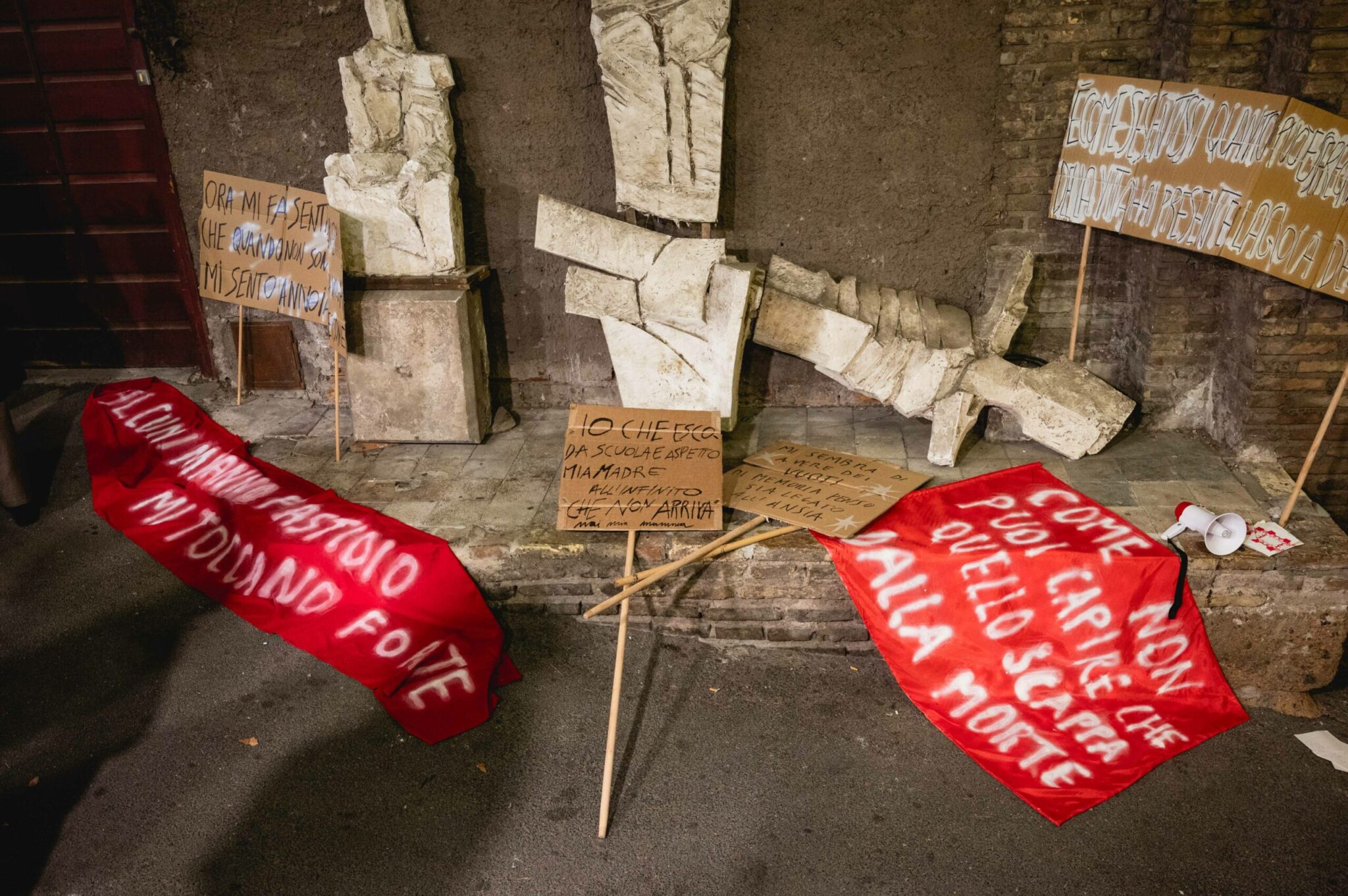
Friday 16 February · 20:00 · Galleria Sala 1Una manifestazione interiore: arianna pozzoli
There's a demonstration over there. But over where? At what time?
On the other side, in that place that has no single name, where there is no now, no before and no after. Inner space is political space. Each of us is a cry that makes itself manifest.
Pietro Turano and I talked with 78 people in the gardens of Piazza Vittorio over ten days or so. People born in Italy, migrant people, people from 8 years old to 90, people with large salaries, people with 300 euros in the bank, sober people, people altered by drugs or alcohol. The same questions for everyone.
From these interviews I chose a number of phrases and, in dialogue with the artist Andrea Lo Giudice, we imagined and created these “manifesto pieces”.
Thanks to Mark Fisher, who in Capitalist Realism, with courage and lucidity, asserted that the psychic pain of the individual has its roots in the multiple systems of exploitation within and among which we live.
Arianna Pozzoli is an actress. She studied philosophy and contemporary dance and graduated in 2014 with Così fan tutte, directed by Gabriele Lavia. In the theatre she has worked with directors including Emma Dante, Andrea Baracco, Francesco Villano, Massimo di Michele, Alessio Bergamo, Claudio Morganti, Roberto Latini, Massimiliano Civica and Chiara Callegari; with the last four she shares the project of the Gruppo di Lavoro Artistico of the Teatro Metastasio (special Premio Ubu 2021). She worked with Dante Antonelli on the Trilogia Schwab (premiere at Romaeuropa 2017) and on Atto di Adorazione (premiere at Romaeuropa 2019). She works with Martina Badiluzzi, with whom she won Biennale Teatro College 2019 with the show The Making of Anastasia; she was assistant director on the show Penelope (premiere at Romaeuropa 2022) and will play Emily Brontë in Cime Tempestose, a 2024 production. Since 2021 she has worked with Muta Imago, in Ashes (Premio Ubu for Best Sound Project 2022) and in Tre Sorelle. She is in the cast of Nanni Moretti's Sol dell’Avvenire. She plays Barbara in Diari D’Amore, Moretti's debut as a theatre director. In 2023 she was a finalist for Best Actress Under 35 at the Premio Ubu and for the Premio Virginia Reiter. Since 2021 she has led intensive acting workshops at Carrozzerie N.O.T.
Friday 16 February · 21:00 · TeatroBasilicaAnche noi scettici: blastula.scarnoduo
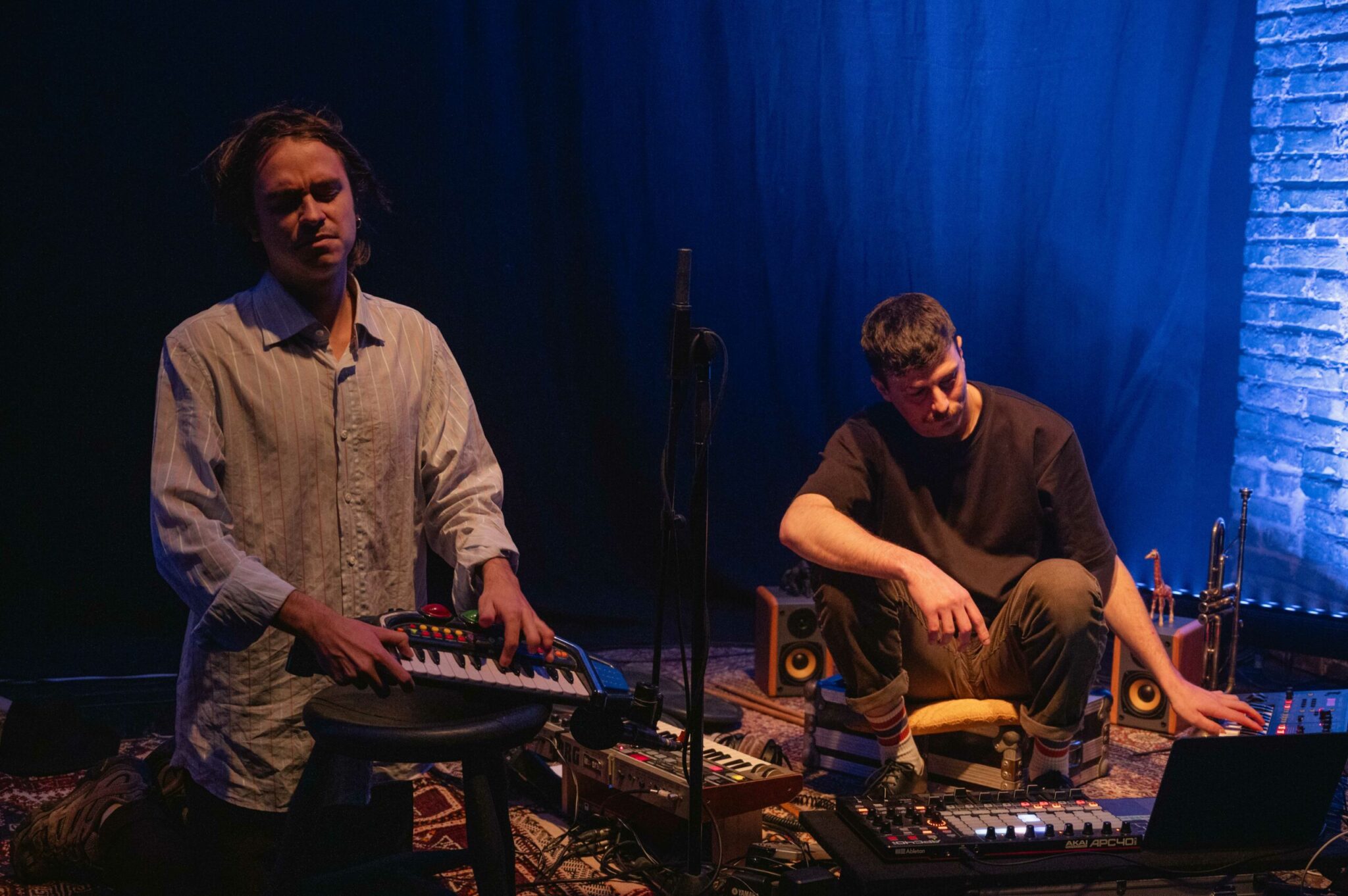
Monica Demuru and Cristiano Calcagnile approach the poetry of Antonella Anedda as if it were a musical destiny. Without giving up plain, linear reading, the duo translates Anedda's gaze and steady song into pure sound. The personal and the political, the biological and the metaphysical, as well as “fantasardo” as a language of origins, are decisive references and places of listening.
Saturday 17 February · 19:00 · TeatroBasilicaHaunted — preview: gaia ginevra giorgi
In 1994 the flooding of a radio archive corrupts the magnetic traces of a voice. The damaged tapes convey the fragile consistency of memory, which dwells not in monumental architectures but in spectral landscapes. Haunted is a dramaturgy of remembrance that pours field recordings, recorded letters, engraved dreams, voices, sound fragments and live sounds into the fine circuits of analogue, between archaeology and imagination.
Saturday 17 February · 20:00 · Galleria Sala 1Meet INDEX: talk curated by viola lo moro
During the week of firmamento, in the spaces of the Galleria Sala 1, Viola Lo Moro meets some of the companies in the programme. The same questions for everyone, to share with the audience their own story and some burning issues about the state of the live arts in our country.
The talks were recorded and have become a podcast that can be listened to again.
This content is hosted by Spreaker: loading it sends some browsing data to Spreaker.
Viola Lo Moro is a poet and lesbian-feminist activist. Born in Rome in 1985, she studied modern and contemporary literature in Rome and Siena, then specialised in comparative literature. She has been part of several feminist and queer collectives. She is a partner in Tuba, the women's bookshop-bar in Rome, whose programme she curates. Her first book of poems, “Cuore Allegro” (Perrone editore), came out in October 2020. She writes articles and short stories for literary and feminist journals (letterate magazine, DWF, Leggendaria, K) and contributes to the magazine of the Società Italiana delle Letterate. She curates a series of literary dialogues within the theatre seasons of Spazio Kor in Asti. Together with Lunetta Savino she performs a reading and account of Carla Lonzi. Her second book of poems, “Luoghi Amati” (Perrone editore), came out in September 2022. She is part of the artistic collective GROSSO SONNO VIOLA, together with the musician Grosso Bernardo and the illustrator and comics artist Michela Sonno. With them she brings a live drawing/poetry/music experiment to festivals. Some of her poems have been translated into French and Catalan.
Saturday 17 February · 21:00 · TeatroBasilicaQuaderno / Greta Garbo: daria deflorian
Between storytelling and small visions, revealing a few secrets with no wish for completeness, Daria Deflorian opens her working notebooks to the audience. Through the original materials of some scenes and their evolution/transformation, she works her way back up to the tip of the iceberg that a show always is, revealing – between autobiography and literary passions – the thread that runs between saying and writing.
Sunday 18 February · 16:30 · TeatroBasilicaLorenzo Tomio in concert: lorenzo tomio
A meditative journey, a concert in the form of a musical stream of consciousness, where Bach chorales coexist with original music, in a continuous work of dismembering and recomposing that allows listeners to converse with their own memories and inner places. An experiment in sonic mnemonics for electric guitar, synth and two 4-track cassette recorders.
Lorenzo Tomio is a guitarist, composer and sound designer who has worked for years in the most varied fields of sound production, from contemporary and experimental music to music for the moving image, creating music for theatre and dance and soundtracks for film and television. He received a special mention from Rolling Stone at the Festa del Cinema di Roma and won the Fabrique du Cinema Award for the music of Punta Sacra, a documentary by Francesca Mazzoleni shortlisted for the David di Donatello 2022. He is co-founder and guitarist of the contemporary music ensemble L’arsenale and collaborates with Muta Imago. His instrumental and vocal works have been performed and commissioned by festivals and ensembles including Astra Concerts, Melbourne; Windspiel, Berlin; MATA Festival, New York; Festival of New Organ Music, London; Zeppelin Festival, Barcelona; Brinkhall Summer Concerts, Helsinki; Piccola Orchestra ‘900, Auditorium Parco della Musica, Rome; Ensemble In Extensio, Montréal.
Sunday 18 February · 17:30 · Galleria Sala 1Breviario: gabriele portoghese and gaia rinaldi
Notes on a show that does not exist.
There are also little prayers that roll about in the dark. Revenges, kisses, trips, ice creams. Scattered notes and little songs.
The lower it is, the closer it is to our prayers.
Sunday 18 February · 18:30 · TeatroBasilicaFly me to the moon: muta imago
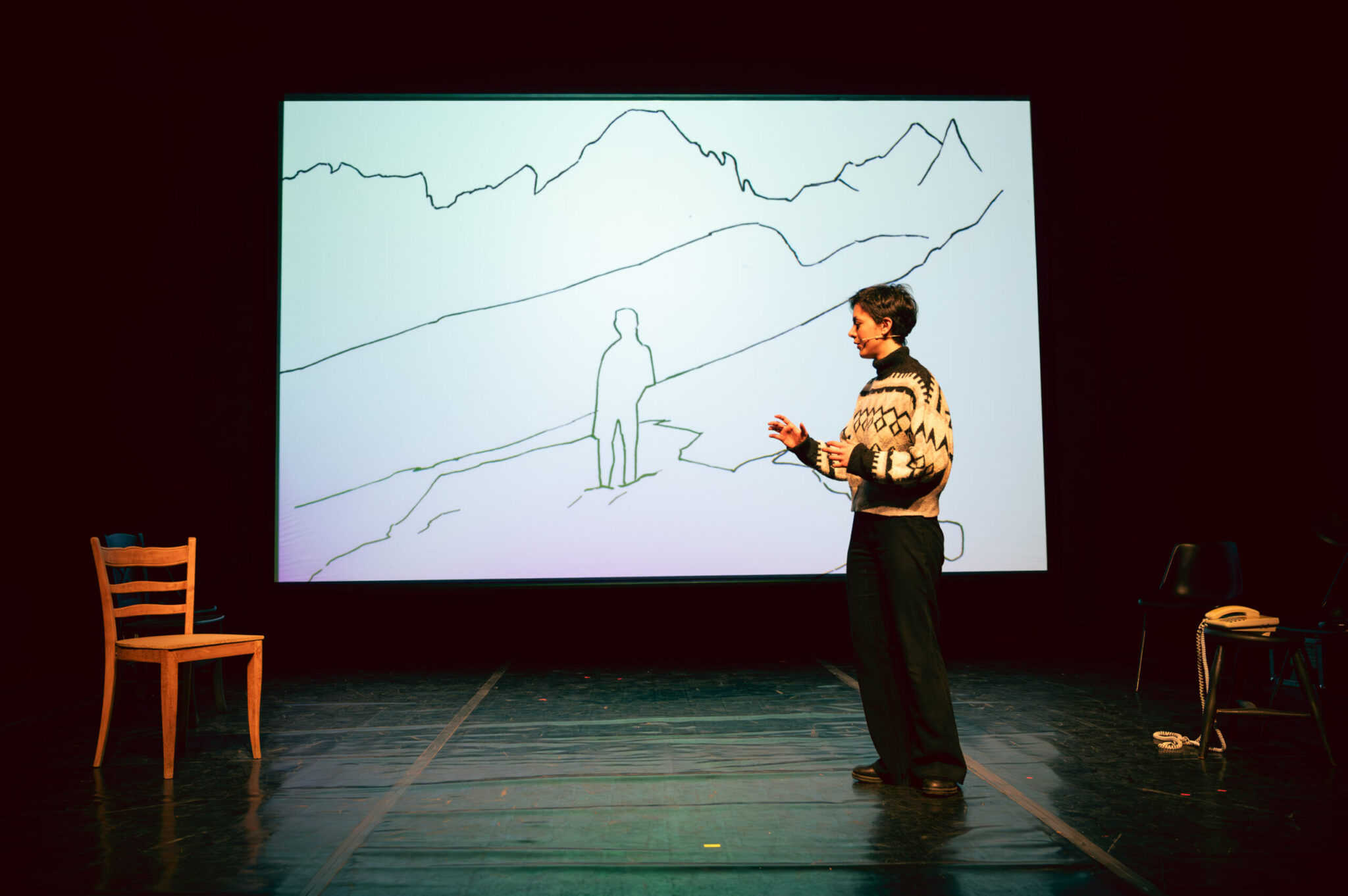
A performance lecture dedicated to the moon and its relationship with our unconscious: a dreamlike, imaginative tale built on a sound and vocal score performed live by Riccardo Fazi, among quotations, archive sound fragments and NASA recordings. A dedication to our childhood that swings between nostalgia for the future, loss of reason and the desire to go home.
: gallery


: show all photos (154)